
 Get your ticket today!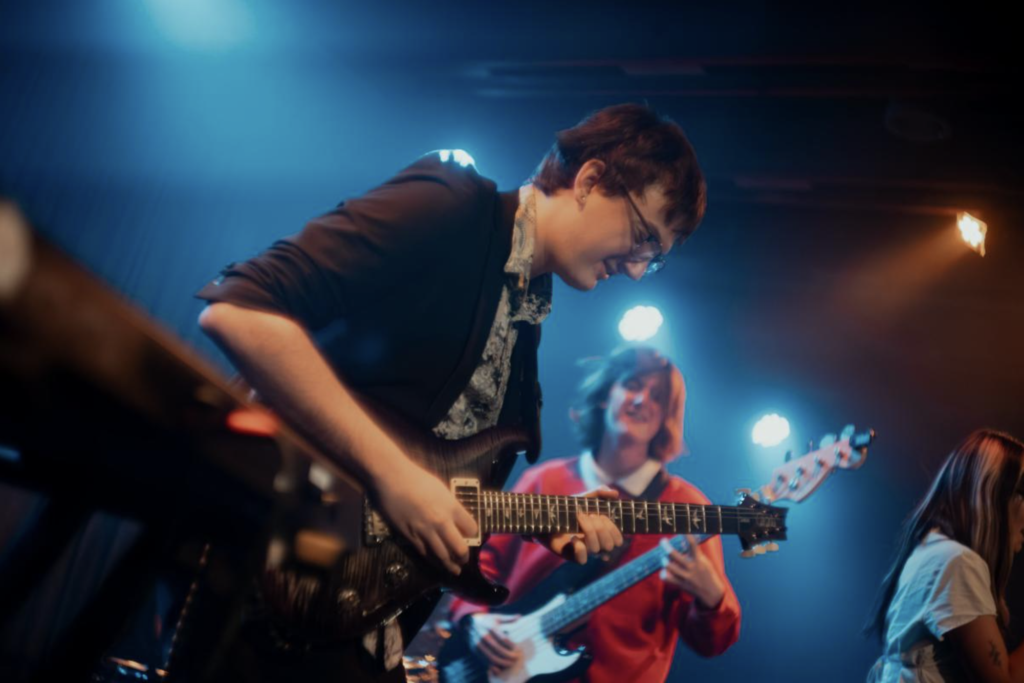
On a recent evening, I stood just outside a rehearsal room at Phoenix Conservatory of Music. The students were getting ready to Battle. They had to decide. They had to sign up. They had to prepare. The drums counted them off. The bass locked in. Then a vocal harmony that wasn’t there two weeks ago.
No one was waiting for instruction or waiting for some adult to tell them what to do.
Students were leading.
They were calling out transitions, adjusting levels, and reminding the group about song form or to tighten the bridge before the chorus.
There was an adult in the room; but they didn’t intervene.
This was Battle of the Bands.
And it is far more than a competition.
When most people see Battle of the Bands, they see stage lights and applause.
I see workforce development. I see executive function in action.
National research from NAfME and the NAMM Foundation confirms what we experience daily: sustained music participation strengthens working memory, attention control, collaboration, and persistence. Peer-reviewed neuroscience studies show that music training enhances cognitive flexibility and emotional regulation.
In other words, ensemble music-making builds the very capacities our workforce depends on.
Getting ready for Battle of the Bands, students:
• Negotiate creative differences
• Solve technical problems
• Adapt under pressure
• Present publicly with confidence
That is project management.
That is leadership.
That is professional development.
And they are learning it as young as 10 years old.
Creative Youth Development research teaches us that belonging is the foundation of growth. When young people are given ownership within a supportive environment, identity stabilizes and confidence expands.
Transformation from a shy quiet child didn’t happen because an adult told them they were a leader.
It happened because they practiced leading. Practiced until it came naturally.
We are proud of the outcomes. There was so much camaraderie and joy that day. True fellowship. And there were winners. And there might have been some disappointment. But there was resilience. And resilience is what will pay dividends off in the future.
The fuller story lives in the next rehearsal — where students celebrate or calm one another, check equipment, analyze what worked, and ask how to improve next time.
That is more than resilience. That is upward mobility.
That is the future rehearsing.
Now, we have to ask ourselves- why is this important? What does this do to the larger picture in our community?
Phoenix is growing rapidly.
If we want that growth to be inclusive and sustainable, we must invest in systems that cultivate leadership, discipline, creativity, and confidence in young people.
Music education — when designed intentionally — is not enrichment.
It is infrastructure.
Community-based, student-led music programs build:
• Workforce-ready skills
• College persistence
• Civic confidence
• Social capital
And when those capacities compound, the entire community benefits.
And if that is the case…then we have to ask ourselves – how do we help it along?
In a few weeks we are having our annual fundraising breakfast, but make no mistake- Jam & Jazz is not simply a fundraiser.
It is the room where this ecosystem becomes visible.
Students, who helped plan and curate the event- take the stage. Families sit beside civic and industry leaders. Artists mentor emerging talent. Philanthropists witness transformation in real time.
It is a reminder that when a community gathers around young people, possibility expands.
I hope you will join us.
And if you are curious about the future of music education — about access, belonging, and opportunity — I invite you to be there. To choose to make an impact. https://pcmrocks.
Because shaping what’s next requires more than applause.
It requires partnership.
The future is rehearsing right now.
Come see it.
Come support it.
Come shape it.
— Regina Nixon, Executive Director, Phoenix Conservatory of Music